When small moments feel huge internally
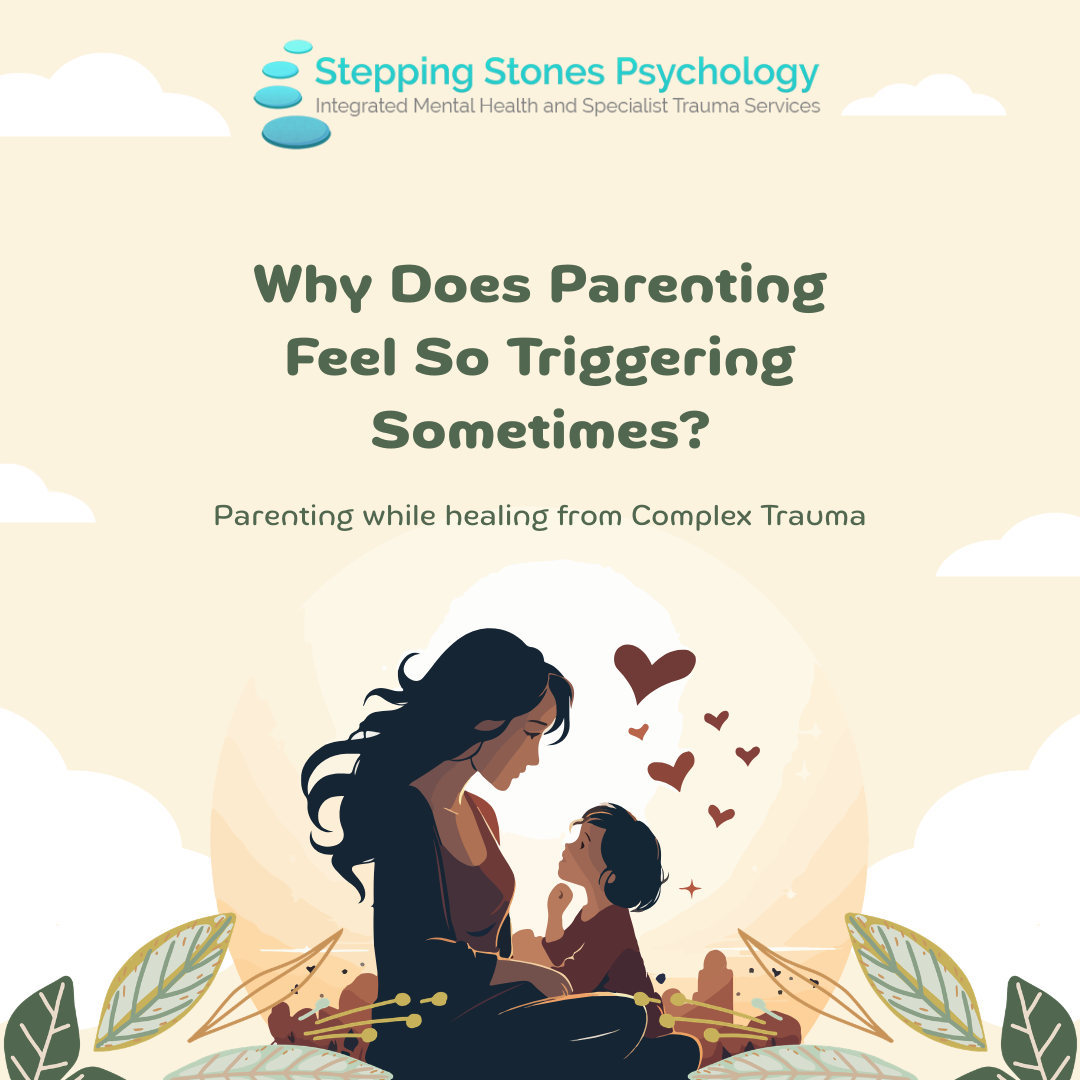
Parenting while living with trauma or CPTSD can feel incredibly hard, not because you don’t love your children enough, but because trauma literally changes the way your nervous system responds to stress, noise, conflict and even closeness.
Many parents with trauma histories spend every day trying to stay calm, present, patient and connected while their nervous system is constantly working overtime in the background. You might notice that parenting feels more emotionally intense for you than it seems to for other people, and you might end up feeling like a failure or incapable of being a parent. Small moments can feel huge internally e.g. a crying child, sibling arguments, constant demands, loud noise or feeling touched can all quickly push your nervous system into overwhelm, so what may seem like small moments on the surface, such as moments you appear to be overreacting to, are not actually small to your nervous system
Parenting in survival mode
I often explore this with parents who have a history of complex trauma, or who are juggling parenting while navigating CPTSD at the same time, and one topic that comes up time and time again is how incredibly hard, almost impossible, it is to try staying calm and regulated, while your whole nervous system is dysregulated, especially when you are over-stimulated from the all the physical touch, crying, shouting and other noises your children make!
Some parents find themselves snapping suddenly, shutting down emotionally, becoming numb, and then feeling flooded with guilt and shame after reacting in ways they wish they had not. Others feel constantly overstimulated or anxious, even during ordinary family moments, but can again feel guilty and ashamed about this as well.
For many trauma survivors, there is also a constant sense of being on alert because of the hypervigilance related to past trauma. Parenting can intensify this because now there is someone you love deeply to protect, so you might end up worrying excessively about your children’s safety, struggling to relax, imagining worst-case scenarios, or feeling exhausted from always scanning for danger or problems.
When your child’s distress triggers your own
At the same time, completely normal child behaviour can feel unexpectedly triggering, for example, children naturally cry, test boundaries, need reassurance, express anger and reject limits. That is normal and healthy behaviour, but if your own childhood involved fear, criticism, neglect, shame, emotional unpredictability and feeling unsafe, those moments can unconsciously stir up old emotional wounds. Most relationships and situations involve a break e.g. you can leave, even if it is just for a moment, to look after yourself, to regulate and take the space you need, but as a parent with children, that is almost impossible. As parents, we know that we suppose to be there for our children during their time of distress, and especially in today’s day and age we get bombarded with social media information about how we need to stay calm, close and connected during those moments because a dysregulated child needs a regulated parent. How is that even possible with all what is going on within your own nervous system?!
Sometimes your child’s distress taps into parts of your own distress that were never fully comforted, processed or healed. I know that one of the most painful struggles many parents carry is the fear of becoming like their own parents. You may overanalyse your reactions, panic after making mistakes or hold yourself to impossibly high standards because you are desperate to break unhealthy cycles. Even losing patience once can leave you feeling consumed by shame or convinced you are damaging your child.
Closeness, attachment and nervous system exhaustion
Many trauma survivors also struggle with closeness and attachment in ways that feel confusing. You may deeply love your children while still finding emotional closeness, affection or constant connection overwhelming at times. I know that some parents notice themselves pulling away emotionally when stressed, needing space but then feeling guilty for it afterward.
Taking all this into consideration, it is no wonder that parenting can also create intense nervous system exhaustion. Then there is the noise, touch, interruptions, sleep deprivation, multitasking and nonstop emotional demands which can leave trauma-sensitive nervous systems feeling overloaded. You may feel like you need more recovery time than other parents, crave silence and solitude or perhaps feel emotionally burned out by never getting a true break.
Boundaries and the fear of getting it wrong
It is also common for some parents with past trauma to find boundaries and discipline emotionally complicated too. If boundaries in your own childhood were harsh, unpredictable, controlling or non-existent, it can be difficult to know what healthy authority looks like. Some parents become overly permissive because they fear being controlling, while others swing between patience and overwhelm. Even enforcing normal limits can bring up guilt, fear or self-doubt for some.
Grieving your own childhood while parenting differently
Another theme I am aware of is that parenting can also have a way of reopening grief e.g. comforting your child, celebrating birthdays, attending school events or hearing even hearing the words, I love you, can sometimes highlight the care, safety, nurturing and emotional connection you may not have received yourself. Many parents quietly grieve their own childhood while trying to give their children something different.
Trauma can also affect relationships and co-parenting as stress, emotional triggers, communication difficulties, trust issues or different parenting responses can create tension between partners, especially when both people are overwhelmed. So the struggle is real when it comes to parenting with a history of trauma, yet, many parents with trauma histories also bring enormous strengths into parenting. They are often deeply empathetic, emotionally aware, fiercely protective, reflective and highly committed to creating safer, healthier relationships for their children.
Healing and Parenting side by side
As someone who is both a parent and living with CPTSD myself, this is something I understand personally as well as professionally. I have had to do a lot of work around my own past trauma, triggers, nervous system responses and the beliefs I learned about myself growing up. While healing has made a huge difference, it is not always linear. From time to time, I still find myself needing extra support, returning to therapy or noticing old feelings of shame, self-criticism and unhelpful beliefs creeping back in during difficult moments of parenting.
I share this because many parents silently believe they should be fully healed by now, but healing and parenting often happen alongside each other. You can be a loving, safe, deeply committed parent and still be working through your own wounds too.
You are not failing because you are finding parenting hard
As so much of trauma is invisible, many parents feel deeply alone in these struggles. You may look around and believe everyone else is coping better, staying calmer, or finding parenting easier. You may tell yourself that good parents don’t struggle this much, but many trauma survivors are carrying enormous emotional weight behind the scenes while still showing up for their children every day.
Healing and parenting often happen side by side. Many parents are learning, repairing, grieving, regulating, and growing while raising their children, and that is huge and really matters. That is why this is an area of trauma work I feel deeply passionate about, not only supporting parents themselves, but also helping them break cycles of generational trauma with compassion rather than shame.
The Healing Power of Connection
While 1-to-1 therapy can be incredibly valuable, there is also something uniquely powerful about healing in the presence of other parents who truly understand. Trauma often creates isolation, shame and the feeling that you are the only one struggling in this way. Group spaces can gently challenge that by helping parents realise that they are not alone, and that there is nothing wrong with them for finding parenting hard. If this resonates with you, please know that you are not failing for finding parenting hard whilst carrying your own trauma history too.
Research into group therapy has consistently shown us how beneficial it is, including reduced shame and isolation, increased emotional support, improved self-understanding and a greater sense of hope and connection. For trauma survivors especially, safe group experiences can also help rebuild trust, belonging, and nervous system regulation through supportive relationships with others.
There is often deep healing in being able to speak openly, feel understood without judgement, learn from other parents’ experiences, and recognise yourself in someone else’s story. Many parents discover that some of their greatest healing happens not only through insight, but through connection. From facilitating therapeutic groups for parents with trauma history this is often the feedback that I received time and time again.
If any part of this resonates with you and you are interested in attending my small, intimate group therapy sessions for parents with a history of trauma/living with CPTSD, please get in touch.
The sessions will be a combination of an emotionally-held for you to feel understood, supported and less alone in the realities of parenting with trauma, while also learning practical tools for regulation, self-awareness, connection and for navigating difficult situations when you are triggered, all done without judgement or shame, and instead with compassion and at a gentle pace.
©Sharmi under Stepping Stones Psychology – All Rights Reserved 2026
Stepping Stones Psychology – Integrated Mental Health & Specialist Trauma Therapy Services ®
All Rights Reserved 2026
—
TAGS: specialist trauma psychotherapy, advanced trauma expertise, complex trauma specialism, nervous-system-informed work, integrative psychotherapy, Complex trauma therapy Sheffield, CPTSD therapist Sheffield, Childhood trauma therapy UK, Specialist trauma psychotherapy, EMDR for childhood trauma, Online trauma therapy UK, Attachment trauma therapy, Therapy for emotional flashbacks, Nervous system focused trauma therapy, Therapy for survivors of abuse, somatic trauma therapy, nervous system therapy, body-based trauma therapy, EMDR Sheffield, online EMDR UK, EMDR for trauma, EMDR for childhood trauma, complex trauma therapy, complex PTSD therapy, CPTSD therapist, therapy for childhood trauma, trauma therapy Sheffield, complex trauma therapist Sheffield,
CPTSD therapy UK, parenting with trauma, parenting with CPTSD