**TRIGGER WARNING: Suicide **
As we come to the end of Mental Health Awareness Month, I feel this is the perfect time to focus on men’s mental health.
Although I am a woman and a strong advocate for women’s rights and mental health, it often saddens me to reflect on the tragic realities surrounding men’s mental health. That is why I wanted to shed some light on this important topic in this blog.
Men’s mental health is still one of the most overlooked conversations in society, and an ongoing issue is that many men are raised to believe they must always stay strong, avoid showing emotion, handle problems alone, ‘Man up’ and keep going. I still remember hearing, many years ago, about a friend’s mum passing away. After the funeral, people kept commenting on how proud his mum would have been of him for staying strong, not showing emotion, and not crying. I remember thinking about how much pressure and expectation that places on someone. As women, we rarely hear those kinds of messages. It is completely understandable to let go and cry when losing a loved one and having to say a final goodbye.
As a result of the unrealistic expectations placed on men, many struggle silently with stress, anxiety, depression, loneliness, burnout, addiction and low self-worth. One of the biggest challenges is stigma e.g. a lot of men fear being judged, appearing weak or becoming a burden if they open up about how they really feel. Some men don’t even realise they are struggling until it starts affecting their relationships, work, sleep, physical health or day-to-day life.
From over 20 years working in the field of mental health, one thing that is very clear to me is that men’s mental health can also look different from what people expect. For example, it isn’t always obvious sadness, but sometimes it appears as anger, withdrawal, overworking, emotional numbness, risk-taking, isolation and substance misuse. This means it might not be taken seriously when men are struggling with their mental health and this is why raising awareness is so important.
The more openly we talk about men’s mental health, the more we normalise men asking for help, checking in on friends and having honest vulnerable conversations, building stronger support systems and understanding that vulnerability is not weakness.
Mental health affects everyone differently, but the bottom line is that nobody should ever feel they have to suffer in silence. Generally speaking, though not always, women may be more likely to talk openly with friends and family, whereas many men may struggle to do so. I do believe that real strength is not pretending everything is fine all the time, but instead recognising when support, connection, rest or conversation is needed and honour that.
I remember, many years ago, when I was a psychology undergraduate student, learning that in many countries, including here in the UK, men die by suicide at significantly higher rates than women, along with some of the factors that may contribute to this. It made me stop and reflect at the time, and it is still something I often think about. I had a look at the House of Common library, and sadly the most recent paper from 2026 still says that suicide in England and Wales is around three times more common among men than among women, and that the gap between sexes has further increased over time. Suicide is also one of the leading causes of death for men under 50.
Although there is not one single reason for this, there are several common factors, which include the fact that men are often less likely to seek help early, and then there is the social stigma which can discourage emotional openness. Many men also internalise stress, trauma or depression, and some cope through isolation, anger, alcohol, drugs or overworking. However, time and time again, what has been identified as a major issue is that many men suffer quietly for long periods before anyone realises how serious things have become.
So again, this is why awareness matters so much. We have to keep encouraging men to talk openly and helping men understand that asking for help is strength, not weakness, and this includes normalising therapy and support. Creating stronger communities and friendships can help to, which takes me my next point: A recorded video call tomorrow talking about all of this.
Before I finish this blog, I want to clarify that it is also important to avoid stereotypes that all men struggle the same way. Mental health affects people differently, and many women also face serious mental health challenges. At the same time, it is a fact that statistically, men are at higher risk of dying by suicide, which is why there has been growing focus on men’s mental health specifically.
I do believe that sometimes one conversation can genuinely change, or even save, someone’s life. I am hoping the call tomorrow might contribute to that.
TOMORROW’S CONVERSATION:
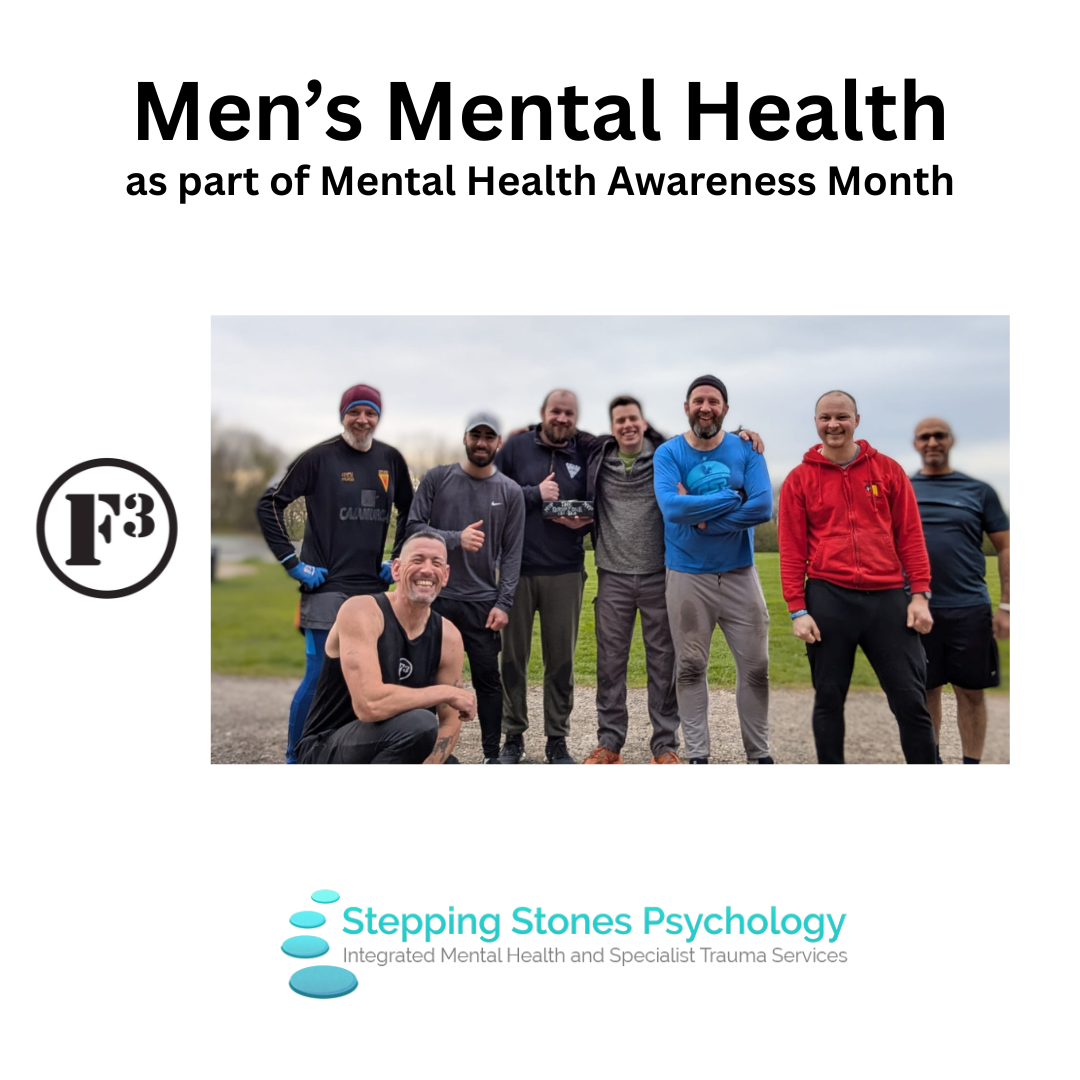
Friday 29th May at 10.30am – Conversation with F3 Sheffield Yorkshire
I will be sitting down with a guest speaker, Josh, from F3 Nations / F3 Sheffield Yorkshire for a short recorded conversation about men’s fitness, fellowship, accountability and personal growth.
We will be talking about how F3 helps men physically and mentally. We would also explore an important topic that is often misunderstood, which is the Faith part of F3.
If you are not religious, please don’t be put off by the term Faith. F3 is not strictly religious and the Faith element is really about believing in something bigger than yourself and encouraging men to grow in character, purpose and accountability. While many members are Christian, and some groups may include prayer or faith-based discussion, F3 is open to men of all backgrounds, beliefs and levels of faith, including those who are not religious at all.
At its core, F3 is about brotherhood and accountability, supporting men’s physical and mental wellbeing, and community service. If you have ever been curious about F3, or are simply looking for connection, motivation or just a positive group of men to be around, this conversation will be well worth watching.
©Sharmi under Stepping Stones Psychology – All Rights Reserved 2026
Stepping Stones Psychology – Integrated Mental Health & Specialist Trauma Therapy Services ® All Rights Reserved 2026
CRISIS LINE AND SUPPORT SERVICES
Immediate support (if someone is in crisis)
Samaritans
One of the most important 24/7 services in the UK.
- Free, confidential support any time of day or night
- Call 116 123 (no charge)
- Or email / write / visit branches
- They listen without judgement, even if you just need to talk
- https://www.samaritans.org
General mental health support
Mind
One of the UK’s leading mental health charities.
- Information, advice, and local support services
- Helps with depression, anxiety, crisis support and more
- Local Mind centres often provide face-to-face support
- https://www.mind.org.uk
NHS England
- GP services for mental health referrals
- NHS Talking Therapies (free counselling in many areas)
- Emergency mental health crisis teams via A&E or 999 if needed
Men-focused mental health support
Campaign Against Living Miserably (CALM)
Focused specifically on preventing male suicide.
- Helpline and webchat service
- Strong focus on men’s mental health, loneliness, and suicide prevention
- Campaigns to reduce stigma around men talking openly
- https://www.thecalmzone.net
Movember Foundation
Well-known for men’s health awareness campaigns.
- Funds mental health and suicide prevention projects
- Focus on encouraging men to talk and seek help earlier
- Runs the annual Movember campaign
- https://uk.movember.com
Reasons to Stay
When the world feels heavy, a kind word can make a difference. Receive anonymous letters from people who have been there. No pressure, no spam, just a quiet reminder that you are not alone.
- https://reasonstostay.org/
Andy’s Man Club
For men who may be struggling and looking for support, this organisation provides free peer-to-peer support groups across the UK, helping men talk openly about their mental health in a safe and non-judgemental space.
- https://andysmanclub.co.uk/
PAPYRUS Prevention of Young Suicide
Specialist support for young people and those worried about them.
- HOPELINE247 (call, text, email support)
- Focus on under-35s at risk of suicide
- Also supports friends, parents, and professionals
- https://www.papyrus-uk.org
#MensMentalHealth #MentalHealthAwareness #MensWellbeing #EndTheStigma #MentalHealthMatters #MensSupport #Community #Awareness #F3 #F3Nation #F3Sheffield #MensMentalHealth #MensFitness #Brotherhood #Sheffield #Yorkshire #Leadership #Community #TraumaTherapyInSheffield #EMDRInSheffield