One thing I have gradually learned as a trauma therapist, something that went against my core training, was that when working with trauma, it is not simply about having experience, such as being exposed to trauma in our work. Based on my core training, I used to believe it was about sitting and listening to clients in a non-directive way, and letting them take charge while providing them with a safe, genuine and non-judgemental space with empathy.
I believed that what was healing was ensuring the client had the freedom to speak about what they wanted to talk about, based on the belief that telling their story can itself be healing, particularly when the story has never been heard compassionately before. I believed that working in this way ensured the client had autonomy and choice, and that my job was to simply accompany them in what they wanted to share and where they wanted to go with their story, rather than steer them.
I am aware that a lot of therapists, including trauma-informed therapists, continue to work in this way. Like me, it often comes from good intentions, without realising that we, as therapists, may actually be doing more harm than help by creating opportunities for clients to describe the trauma in great detail, where they end up not just simply remembering it, but actually reliving it and becoming more and more overwhelmed (sometimes even to a point of complete destabilisation).
Without appropriate trauma training, one wouldn’t know about this, and without this knowledge, they wouldn’t know how to navigate that safely or ethically, so they could end up working outside their competence. We don’t know what we don’t know, so this is not at all a judgement or criticism of therapists. At the same time, this is a reality that this is how therapists can unfortunately end up harming clients with a trauma history who believe they are seeing a therapist who knows how to work with trauma, either because they are advertising themselves as a trauma-informed therapist or trauma therapist, or tick a box on the directory where it says they are able to work with trauma.
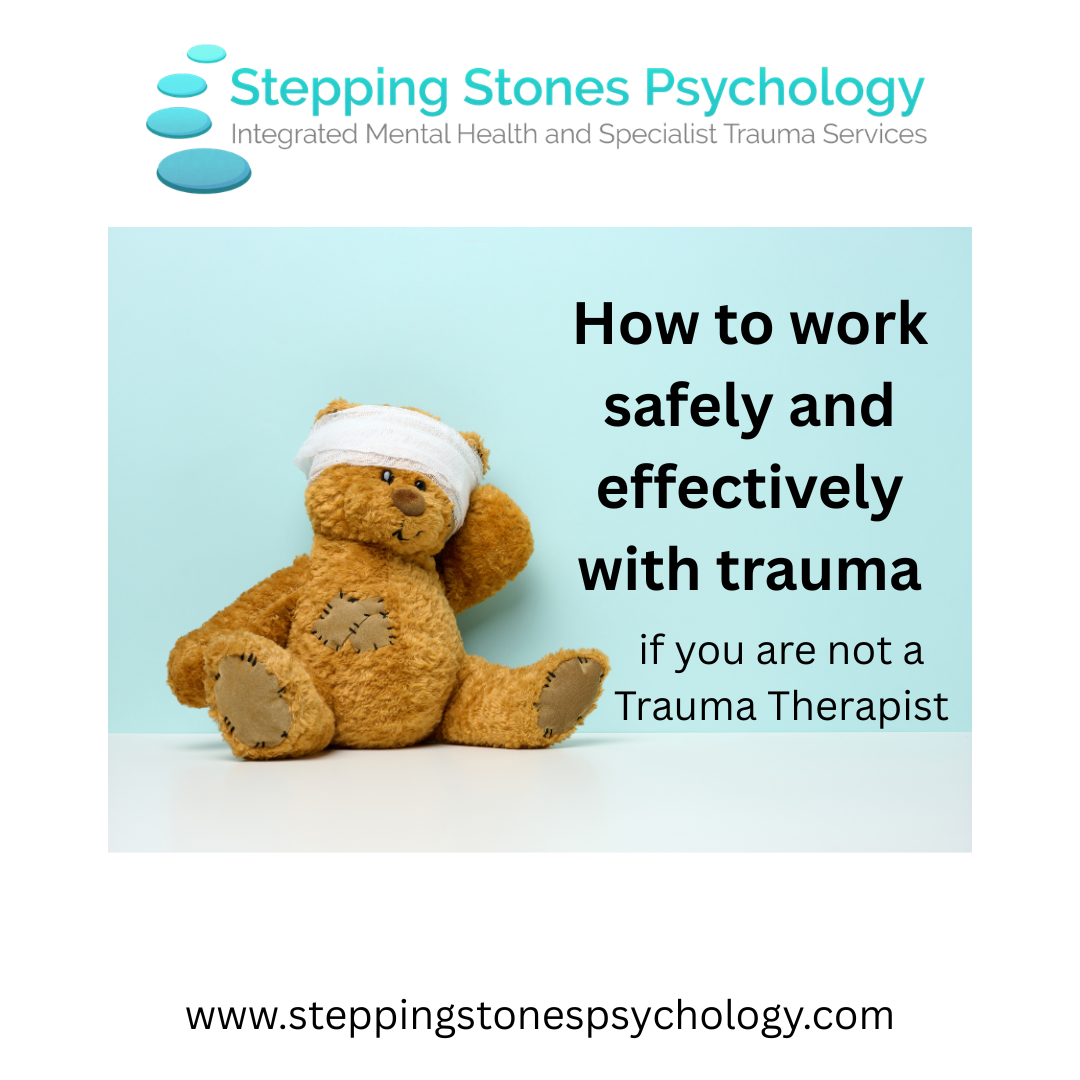
Working with trauma requires an understanding of how trauma affects the nervous system, how to recognise when a client is becoming overwhelmed or moving outside their window of tolerance, and how to work in a way that supports safety, stabilisation and regulation rather than inadvertently contributing to further dysregulation. It is not simply about being trauma-aware or creating a safe space. Of course, that is important too, but in trauma work, what is really crucial and can’t be highlighted enough is that it is about having the knowledge and skills to work with trauma safely and appropriately.
I was employed as a specialist trauma and attachment therapist by a dedicated trauma service in the past, and even while working there, although on paper I was a specialist trauma therapist, there was definitely so much I still didn’t know about trauma and trauma therapy. At that time, I was even highly educated and trained within the field of therapy, including holding both a Professional Diploma and Advanced Professional Diploma in Counselling in addition to completing Level 8 clinical training in Counselling Psychology, yet it was still a time when I didn’t even know about the phased approach! Looking back, it scares me to think about how much harm I could have caused unintentionally, and surely there have been mistakes I have made.
I have come so far since then and feel confident embracing the title of trauma therapist now. However, I am still learning, and I make sure I continue to learn and grow when it comes to trauma work, as I believe it is not work to take lightly. What I find very scary is the reality that those who could benefit the most from this learning are the ones who wouldn’t be attending training or CPD on trauma, as they believe they know it all and don’t need to learn anything new about trauma. They continue to believe that providing a safe space, listening empathically and allowing clients to talk about their trauma in as much detail as they wish is all that is needed, and that being heard is, in itself, enough to make the work therapeutic. I have seen this being expressed over and over again by therapists in therapy forums and large professional network spaces like LinkedIn, and it deeply worries me each time I witness this.
The problem is that good intentions, empathy and a non-judgemental space, while important, do not automatically make our work trauma-informed, and without the right knowledge and skills, we can unintentionally cause harm while believing we are helping. It is something that brings me a lot of concern and worry, especially the more I think about the harm that could be done. That is why I try to advocate for this through my blogs and other posts, but the most recent step is delivering training about this. I feel particularly passionate about this because I believe this learning needs to happen early in therapists’ careers, before certain ways of working become established and before they unintentionally cause harm without realising it.
The BACP Ethical Framework explicitly requires practitioners to work within their competence, seek relevant expertise or referral when needed, and use supervision to support safe practice. I am so excited to launch a new training in my trauma-informed training series and this one is suitable for all therapists, but I developed it especially with trainees and new therapists in mind (early intervention, so to speak). I will be delivering it for the first time on Monday for a registered counselling charity that is also a BACP Organisational Member.
Alongside my other existing trauma-training series, I have pre-developed training packages available for organisations, but I can also develop bespoke training packages tailored to the specific needs of a service or organisation. Although, I have a fixed rate for delivering training packages to organisations, I do also recognise that not all services have the same level of funding available. For charities, not-for-profit organisations and other services where funding is genuinely limited, I am happy to be flexible with my fees and consider a reduced rate where possible. It is very important to me that that access to good-quality trauma training should not be out of reach for services simply because of financial constraints. If you or your organisation are interested in trauma training, whether from my existing training series or through a bespoke package tailored to your service’s needs, please feel free to get in touch via contact@steppingstonespsychology.com I would be happy to discuss your requirements and explore how I might be able to support you.
Finally, a question for my fellow therapists: I would really appreciate your thoughts and input as a way of helping me continue to develop and improve my training, ensuring it remains relevant, practical and responsive to the needs of therapists. What do you feel is missing from trauma training and what would you find genuinely helpful to learn more about when working with trauma? Are there particular areas you feel less confident in or topics you wish had been covered more in your training? I want to make sure my training addresses the real challenges therapists face in practice, so your thoughts and suggestions would be genuinely appreciated. If there is something you would like to see included in future training, please feel free to send me a private message or an email to contact@steppingstonespsychology.com I would love to hear from you! 🙂
~ Sharmi
©Sharmi under Stepping Stones Psychology – Integrated Mental Health & Specialist Trauma Therapy Services ® ~ All Rights Reserved 2026
If you like to follow my work, here are my social media links:
Please note: I am the most active on my Facebook Page:
Facebook Page
Facebook Group for clients/those seeking trauma resources
Facebook Group for therapists/mental health professionals
Instagram
LinkedIn
Youtube Channel
Support group for parents living with trauma/CPTSD