**TRIGER WARNING**: War, Holocaust, Violence, Abuse and other traumatic incidents
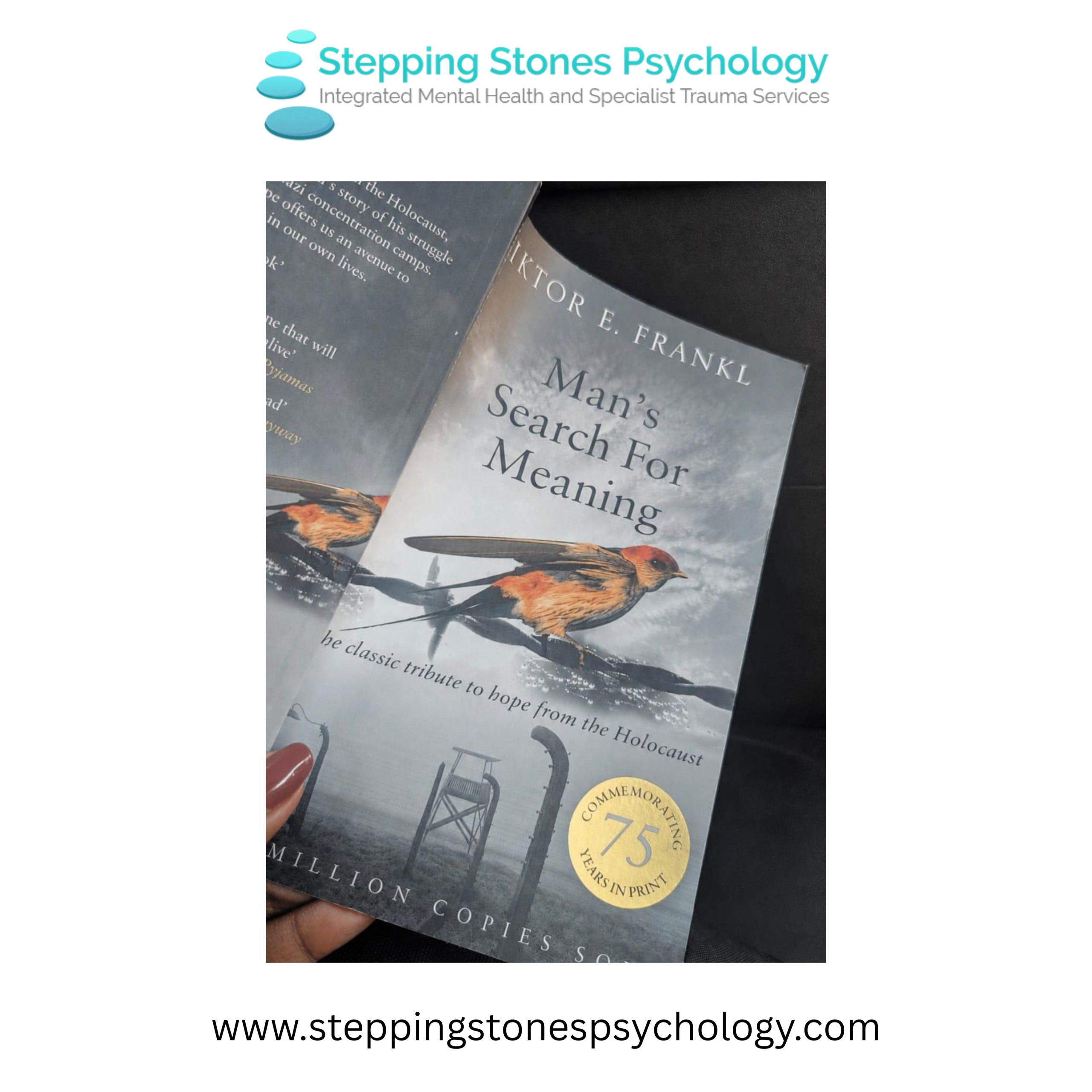
For many years, I kept hearing about Man’s Search for Meaning by Viktor Frankl, and as someone who has always loved reading, and later went on to study psychology, it was one of those books that seemed to come up again and again. I had skimmed parts of it over the years, but I never actually sat down and read it properly until recently.
For those who have not heard of him, Viktor Frankl was an Austrian psychiatrist, neurologist and psychotherapist who survived the Holocaust. He developed an approach to therapy called Logotherapy, which is based on the idea that one of our deepest human motivations is the search for meaning and purpose in life. Although Frankl’s experiences in Nazi concentration camps are what made him widely known, he had already developed the foundations of Logotherapy before he was imprisoned, but his experiences during the Holocaust tested and shaped his theory under the most unimaginable circumstances. Frankl later wrote that even when many things are taken away from us, people may still retain some freedom in how they respond to what happens to them.
As I read the book, I found myself thinking about many of the incredibly strong people I have had the privilege of working with over the years. This include people who have survived war, displacement, domestic abuse, sexual violence, rape, childhood abuse and neglect, loss and other forms of profound trauma. Many have shared that there were times when life felt completely meaningless and times when simply getting through the day took all the energy and strength they had, and yet, over time, I have witnessed something remarkable.
This is not because trauma made them stronger (a toxic positive psychology-based idea I strongly disagree with), and it is not because suffering is something anyone would choose, as trauma can leave deep emotional, physical, and psychological wounds that can affect people in many ways, but instead what I have witnessed is that, despite what they have endured, many people slowly begin rebuilding their lives. They find moments of connection, rediscover values that matter to them and find reasons to keep going, even when life remains incredibly difficult. For some, meaning comes through their children or family, for others, it may come through helping others, reconnecting with their culture or faith, pursuing education, creating art, advocating for others or simply deciding that their trauma will not be the only thing that defines their story.
This is something we often see in therapy such as healing is not about pretending that terrible things did not happen or about forcing yourself to be positive or rushing towards acceptance before you are ready, but healing often begins by making space for grief, anger, fear, sadness and pain. At the same time, healing can also involve discovering that your life can still hold meaning alongside those experiences. This is something I often talk about with clients such as holding two opposites, for example, having meaning does not erase suffering, but it can sometimes help people carry it differently and move forward.
One thing I appreciated about Frankl’s book is that it is not simply a theory about resilience but actually based on observations made under some of the harshest conditions imaginable, while exploring how human beings make sense of their lives. Frankl believed that when suffering cannot be avoided, people may still have some choice in how they respond to it. This does not mean suffering is good, necessary or something we should seek, but instead it is suggests that even in painful circumstances, people may still find purpose, hope, connection or values that matter deeply to them.
The second half of the book explains Logotherapy in more detail such as Frankl’s belief that the search for meaning is a fundamental human motivation has influenced psychotherapy, counselling, coaching and wider conversations about wellbeing for decades. I think one reason this book has remained so meaningful to so many people is because Frankl combines psychology, philosophy and everyday human experiences in a way that is accessible to many readers. I know that people often turn to this book during times of grief, illness, career uncertainty or major life changes because it explores questions many of us eventually ask, such as what gives my life meaning, and, how do I keep going when life becomes difficult?
At the same time, I think it is really important to recognise that Frankl’s ideas are not the whole story. Modern psychology understands that meaning can be an important part of resilience, but healing and recovery are also influenced by many other factors, including supportive relationships, safety, access to healthcare, financial stability, culture, biology and appropriate mental health support.
There is no single path to healing and finding meaning alone is not enough to overcome every hardship, even research on trauma also reminds us that healing is not necessarily about bouncing back to who we were before. Sometimes healing is about slowly building a different life, one that makes room for both pain and hope and this is where the concept of post-traumatic growth comes in. Post-traumatic growth refers to the possibility that, for some people, navigating adversity may eventually contribute to deeper relationships, a greater appreciation of life, increased personal strength, new possibilities or a clearer understanding of what truly matters.
However, this does not happen for everyone, and I want to make it very clear that it should never become another expectation placed on people who have suffered. Healing looks different for everyone, and it happens at different stages and in different ways. Personally, when I reflect on my own healing journey, I recognise that I am not where I was five years ago and I also know that healing is ongoing, and that in another five years, I may be in another place again.
This is why I believe it is so important to remember that growth is not a measure of whether someone has recovered well, but simply one possible part of some people’s journeys, alongside the reality that trauma can continue to affect people in different ways. Whether you agree with all of Frankl’s ideas or not, one message continues to resonate with many people is that while we cannot always choose what happens to us, we may still have some choice in what we value, how we respond, and how we move forward, and sometimes, that may be where healing begins.
Interestingly, one of the unexpected parts of writing this blog was realising that, while reflecting on Frankl’s ideas about meaning, trauma and healing, I was also beginning to reflect on my own journey. Through the process of writing, I started noticing connections between the themes in his work and a particular experience from my own life that I had not previously viewed through the lens of trauma and healing.
For much of my life, I avoided war-related books, films and stories. I assumed this was simply because I have always been a Highly Sensitive Person (HSP) and experienced high affective empathy, which is the ability to emotionally resonate strongly with another person’s experiences, including fictional characters. In movies or books, when a character was suffering, I could feel their fear, sadness or grief very intensely.
While I still believe my sensitivity and empathy played a part, I now recognise that there was more to it, for example, looking back, I can see that my avoidance to war-related content was also connected to trauma. Sometimes our minds and bodies protect us from experiences and memories that feel too overwhelming to revisit, for example, avoidance can sometimes be a way of surviving when we do not yet have the safety or resources to process what happened.
Part of my own healing journey has involved working through my own experiences of war, including the fear associated with bombing, pain of losing loved ones during the war, and displacement after having to flee the war. Understandably, I also carried grief, loss and trauma connected to these experiences, and for more than 40 years, I kept these memories tightly contained because they were too painful to revisit, even briefly. In many ways, this was my body’s way of protecting me and only recently, through therapy, have I begun to gently work through these particular experiences and allow myself to revisit some of the memories I had kept away for so long. I see this as another layer of healing.
While writing this blog about Victor Frankl’s book, I realised something important which is that I have finally allowed myself to pick up and actually read a war-related book, which I see as another layer of healing because it was a sign that I could begin approaching these stories with more openness and choice, rather than only fear and pain. Healing does not always look like a dramatic transformation but being able to do something today that once felt impossible.
Sometimes that can look like asking for help, setting boundaries, reconnecting with yourself, allowing yourself to feel emotions you once had to suppress or simply recognising how far you have already come.
Perhaps one of the things I take from Frankl’s work, and from the many people I have had the privilege of supporting, is that healing is not about leaving the past behind or pretending that painful experiences did not happen, but about learning that our experiences are part of our story, but they do not have to be the whole story.
Frankl’s words continue to resonate with so many people because they remind us that meaning is not always something we discover when suffering has ended. Sometimes meaning is something we slowly create as we learn to live alongside what has happened. This does not change the past or make suffering acceptable or does not take away the pain, but it can remind us that even after experiences that have deeply affected us, our lives can still hold connection, love, purpose and possibility.
Sometimes meaning is found in big moments, but often it is found in small ones, for example, the first time we allow ourselves to feel something we once avoided, the first time we ask for support, the first time we reconnect with something we once lost, or the first time we recognise that we are still here despite everything we have been through.
For anyone who is on their own healing journey, I hope you remember that healing does not have a fixed timeline. Please be kind to yourself and remember that there is no single way to heal and there is no expectation to find meaning before you are ready. You simply creating enough safety to take the next small step is part of healing too.
What has helped you find meaning during difficult times? As always, only share what you feel comfortable sharing.
©Sharmi under Stepping Stones Psychology – Integrated Mental Health & Specialist Trauma Therapy Services ® ~ All Rights Reserved 2026
If you like to follow my work, here are my social media links:
Please note: I am the most active on my Facebook Page:
Facebook Page
Facebook Group for clients/those seeking trauma resources
Facebook Group for therapists/mental health professionals
Instagram
LinkedIn
Youtube Channel
Support group for parents living with trauma/CPTSD