When you have experienced trauma, it is so important to be mindful that there are certain trauma protocols we need to consider to make sure that trauma work is done safely, responsibly and ethically. This piece of work is done in stages, with the first stage being what is called ‘Safety and Stabilisation’ work.
A large part of this first stage is helping you develop skills to calm your nervous system and support you in returning to a more settled state when something has triggered you. So, basically, it is about developing skills for emotional resilience and coping, as when you have experienced trauma, you can very easily feel unsettled, overwhelmed or on edge.
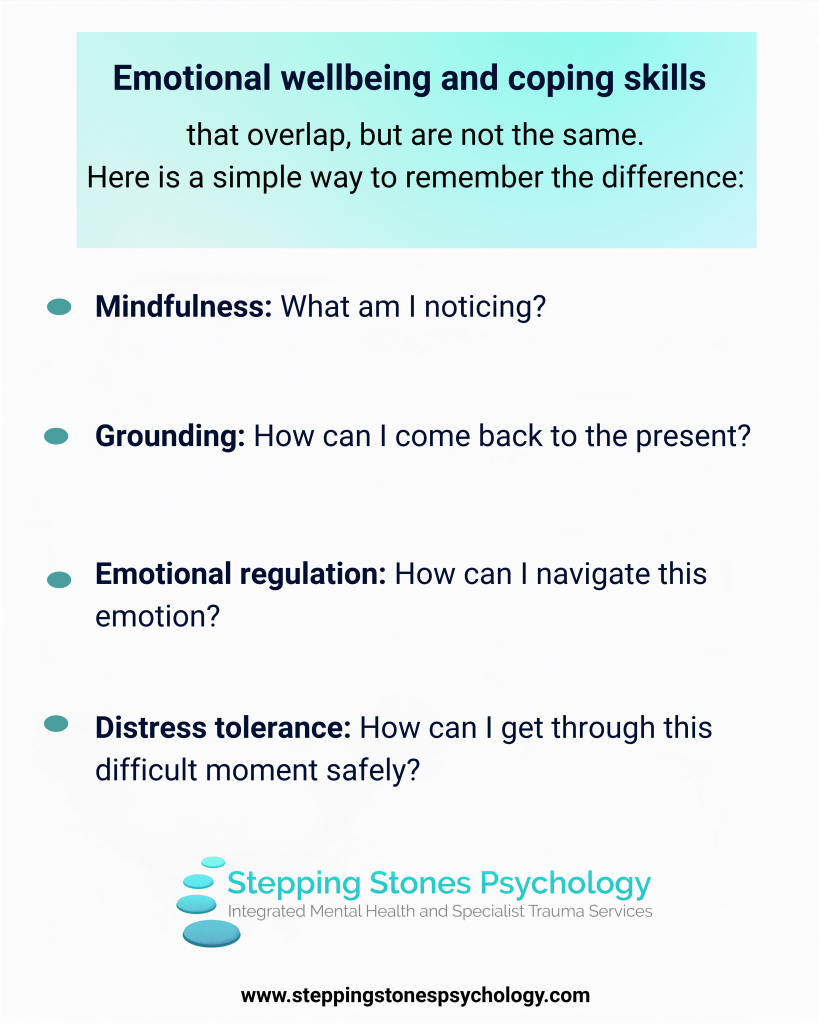
I often notice that my clients, and sometimes even therapists, believe that some of these skills are the same, for example, mindfulness, grounding and emotional regulation. The thing is, although they overlap greatly, they are three different skills. So, today’s post is about the differences, but I am trying to explain them in simple terms, using DBT work as a guide, to hopefully make it a bit easier.
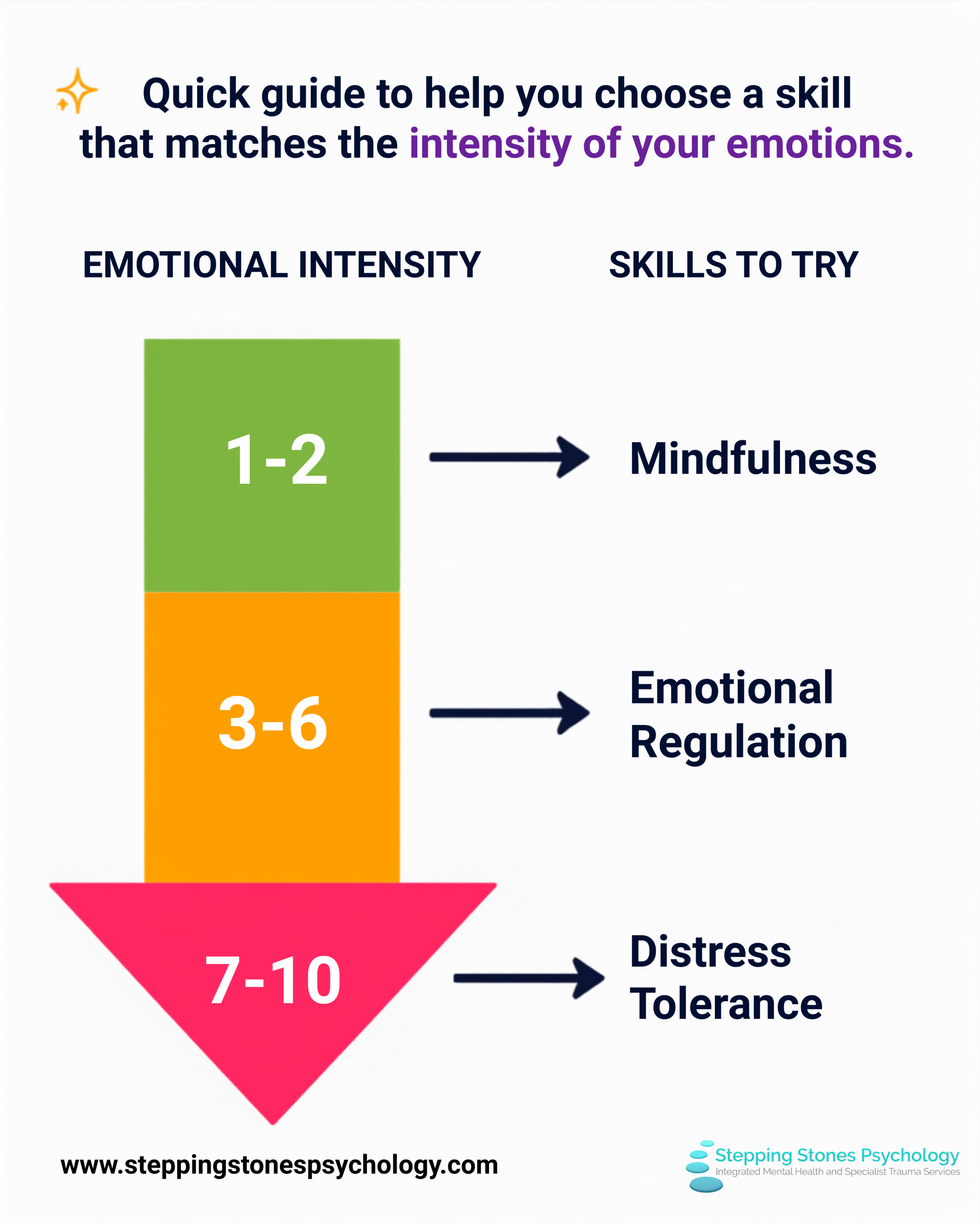
Mindfulness is about noticing what is happening, so you pay attention to what is happening right now, and this could include noticing your thoughts, feelings, body sensations or surroundings without judging them. It could sound something like: “I notice my heart is beating fast and I’m having thoughts that something bad will happen.”
Grounding is about coming back to the here and now, so it is used when you feel overwhelmed, disconnected, panicky or caught up in distressing thoughts. It helps bring your attention back to your body and the present moment, so I would say to clients something like: “Feel your feet on the floor, name five things you can see, or hold something cold, etc.”
Emotional regulation is about helping yourself to navigate the feelings or big emotions that are coming up, so think of it as the things you do to cope with and reduce the intensity of difficult emotions. It isn’t about getting rid of emotions or pretending you don’t feel them. So, what it might look like is slowing your breathing, taking some space, using a coping strategy, talking to someone or doing something soothing, etc.
Distress tolerance is about getting through the tricky moment, so it is about skills for when the distress is very intense and you can’t make it go away right now. The aim is to get through the difficult moment without making things worse or hurting yourself. I guide clients to say something that’s maybe helpful in that specific moment. For example, it could be: “This feels unbearable right now, but I can get through the next 10 minutes. I don’t have to fix everything right now.”
So, which one do you think you need most right now? 
Maybe you need to slow down and notice what is happening through mindfulness, or maybe you need grounding to help bring you back to the present moment. Perhaps you need emotional regulation skills to help you navigate a difficult emotion, or distress tolerance to help you get through a particularly difficult moment.
This just shows how different skills can be helpful at different times, depending on what you are experiencing. Generally speaking, starting with mindfulness and grounding helps us become more aware and settled, so we can then learn to regulate our emotions before moving on to tolerating intense distress. After this, we move into stage 2, where trauma-processing work starts to happen.
I hope this is helpful.
~ Sharmi
©Sharmi under Stepping Stones Psychology – Integrated Mental Health & Specialist Trauma Therapy Services ® ~ All Rights Reserved 2026
If you like to follow my work, here are my social media links:
Please note: I am the most active on my Facebook Page:
Facebook Page
Facebook Group for clients/those seeking trauma resources
Facebook Group for therapists/mental health professionals
Instagram
LinkedIn
Youtube Channel
Support group for parents living with trauma/CPTSD